
Understanding Sensory Integration: A Teacher’s Guide
Answers to Questions Teachers Ask About Sensory Integration is a vital resource, offering practical tools and insights for educators supporting students with sensory challenges.
This award-winning book, impacting up to 20% of students, provides strategies to recognize, understand, and address Sensory Processing Disorder (SPD) effectively in classroom settings.
It equips teachers with methods to discern SPD from behavioral issues, prevent meltdowns, and foster a supportive learning environment for all students, pre-school through high school.
What is Sensory Integration?
Sensory Integration refers to the neurological process organizing sensations from the body and environment, enabling functional behavior. It’s how we take in information through our senses – vestibular (movement), proprioceptive (body awareness), tactile (touch), auditory (hearing), visual (sight), and interoceptive (internal body sensations) – and make sense of it.
Effective sensory integration allows children to process and respond appropriately to sensory input, impacting motor skills, coordination, and even social interactions. When this process is disrupted, it can lead to Sensory Processing Disorder (SPD), where the brain struggles to organize these sensations.
Understanding this foundational process is crucial for teachers. The book, “Answers to Questions Teachers Ask About Sensory Integration,” delves into these systems, offering insights into clinical observations, parent interviews, and standardized assessments used to evaluate them. It emphasizes recognizing a child’s unique sensory profile and how it influences their behavior and learning within the classroom.
Recognizing Sensory Processing Disorder (SPD)
Sensory Processing Disorder (SPD) isn’t a standalone diagnosis but a condition where the brain has difficulty processing sensory information. Recognizing SPD involves observing patterns of atypical responses to stimuli. Children might be overly sensitive (hypersensitive) or under-responsive (hyposensitive) to sensations.
Signs can manifest as difficulty with motor coordination, muscle tone, and fine motor skills. Visual perception challenges and difficulties in social relationships are also common. “Answers to Questions Teachers Ask About Sensory Integration” highlights the importance of discerning these “out-of-sync” behaviors.

Teachers can look for behaviors like struggling to get dressed, being easily distracted, impulsivity, or exhibiting extreme reactions to seemingly harmless stimuli. Utilizing tools like the Sensory Processing/Integration Reasoning Tool (SpIRiT) alongside parent input, aids in identifying these unique patterns and understanding the underlying sensory needs of the student.
How SPD Impacts Learning
Sensory Processing Disorder (SPD) significantly impacts a student’s ability to learn, often manifesting as difficulties in focus, attention, and academic performance; The brain’s struggle to process sensory input diverts cognitive resources away from learning tasks. A child overwhelmed by tactile sensations, for example, may find it hard to concentrate on reading.
“Answers to Questions Teachers Ask About Sensory Integration” emphasizes how SPD can interfere with motor skills crucial for writing and visual perception needed for reading comprehension. Impulsivity and distractibility, common SPD traits, disrupt classroom participation and task completion.
Furthermore, challenges with muscle tone and coordination can affect handwriting legibility and physical education participation. Understanding these connections allows teachers to tailor instruction and create a supportive environment, minimizing sensory overload and maximizing learning potential for students with SPD.

Common Questions Teachers Ask
Teachers frequently seek guidance on identifying SPD, differentiating it from behavior, understanding involved sensory systems, and implementing effective classroom strategies for student support.
What does Sensory Processing Disorder look like in the classroom?
Students with Sensory Processing Disorder (SPD) may exhibit a wide range of behaviors that can significantly impact their learning and classroom participation. These manifestations often include difficulties with motor coordination, evidenced by clumsiness or trouble with tasks requiring fine motor skills like writing or buttoning.
Muscle tone irregularities can also be observed, leading to fatigue or difficulty maintaining posture. Visual perception challenges might present as difficulty tracking objects or copying from the board. Impulsivity and distractibility are common, making it hard for students to focus and follow instructions.
Furthermore, some students may struggle with getting their coats on correctly, demonstrating proprioceptive challenges. Others might be overly sensitive to certain stimuli – like loud noises or bright lights – or conversely, seek out intense sensory input. Recognizing these patterns is the first step towards providing appropriate support.
How can I differentiate between SPD and behavioral issues?
Distinguishing between Sensory Processing Disorder (SPD) and behavioral issues requires careful observation. While both can manifest as disruptive classroom behaviors, the underlying causes differ significantly. Behavioral issues are often intentional or a response to social dynamics, whereas SPD-related behaviors stem from neurological differences in processing sensory information.
A key difference lies in consistency. SPD behaviors are often predictable and triggered by specific sensory stimuli. A child might consistently avoid certain textures or become overwhelmed in noisy environments. In contrast, behavioral issues may be more situational and linked to motivation or social interactions.
Consider the child’s reaction – is it a deliberate act or an involuntary response? Seeking input from parents and occupational therapists is crucial for accurate assessment and appropriate intervention strategies.
What are the key sensory systems involved in SPD?
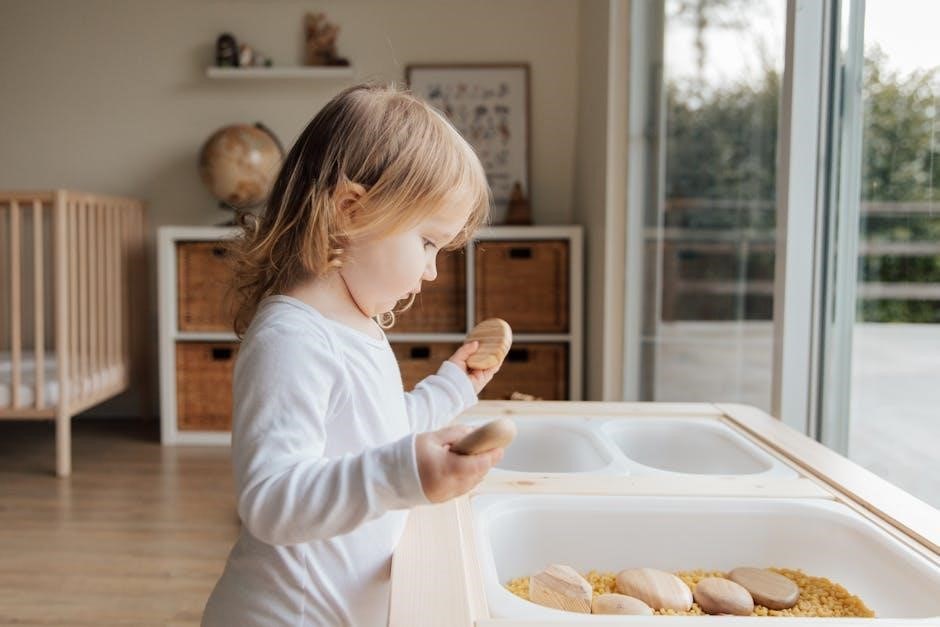
Several sensory systems are central to understanding Sensory Processing Disorder (SPD). These include the vestibular (balance and movement), proprioceptive (body awareness), and tactile (touch) systems. Auditory (hearing), visual (sight), and interoceptive (internal body sensations) systems also play critical roles.
Evaluations involve clinical observations, parent/caregiver interviews, and standardized assessments to understand how each system functions. Professionals assess postural mechanisms and motor planning abilities, utilizing tools like the Sensory Processing/Integration Reasoning Tool (SpIRiT).
Dysfunction in any of these systems can lead to a variety of challenges, impacting motor skills, coordination, and a child’s ability to interact effectively with their environment; Understanding these systems is fundamental to supporting students with SPD.
The Vestibular System and its Role
The vestibular system, located in the inner ear, profoundly impacts balance, coordination, and spatial orientation. It’s crucial for seemingly simple tasks like sitting still, walking, and maintaining focus. In students with SPD, vestibular dysfunction can manifest as clumsiness, difficulty with motor planning, or a constant need for movement.
Oversensitivity may lead to anxiety during activities like playground play or car rides, while under-responsivity can present as a thrill-seeking behavior or a lack of awareness of body position.
Clinical evaluations assess postural mechanisms related to this system. Teachers can support students by providing opportunities for controlled movement and creating a classroom environment that minimizes disruptive vestibular input.
Proprioception and its Impact on Motor Skills
Proprioception, often called “body awareness,” is the sense of where your body parts are in space. It’s vital for coordinated movement, muscle tone, and fine motor skills. Students with proprioceptive challenges may appear clumsy, struggle with handwriting, or have difficulty judging force – breaking pencils frequently, for example.
Under-responsivity can lead to a craving for deep pressure, like seeking tight hugs or bumping into things. Conversely, over-responsivity might cause discomfort with certain textures or movements.
Evaluations consider motor planning abilities alongside proprioceptive input. Teachers can offer activities that provide proprioceptive feedback – carrying heavy books, pushing/pulling objects, or engaging in activities like yoga – to improve body awareness and motor control.
Tactile Sensitivity and Classroom Challenges
Tactile sensitivity refers to how a child processes touch. Some students are hypersensitive, finding certain textures – like clothing tags or classroom materials – overwhelming or even painful. Others are hyposensitive, seeking out tactile stimulation and potentially not noticing minor injuries.
In the classroom, this can manifest as avoidance of messy activities (paint, glue, sand), difficulty with group work involving physical contact, or distress over unexpected touches. Conversely, a child might constantly touch others or objects.
Understanding a child’s tactile preferences is key. Providing alternative materials, allowing for personal space, and offering opportunities for controlled tactile exploration can support their learning and comfort. Careful observation and parent/caregiver input are crucial for effective strategies.

Strategies for Supporting Students with SPD
Effective support involves creating a sensory-friendly environment, proactively preventing meltdowns, and responding with understanding when challenges arise for students with SPD.
Creating a Sensory-Friendly Classroom Environment
Establishing a calm and organized classroom is paramount for students with SPD. Minimize visual distractions by using neutral colors and reducing clutter. Consider flexible seating options – allowing students to choose where they learn best, such as standing desks or wobble cushions – can be incredibly beneficial.
Provide quiet spaces where students can retreat when feeling overwhelmed. These “sensory corners” could include comfortable seating, weighted blankets, or calming visuals. Be mindful of auditory sensitivities; reduce excessive noise by using rugs, acoustic panels, or offering noise-canceling headphones.
Tactile considerations are also key. Allow fidget tools – stress balls, textured objects – to help students self-regulate. Be aware of potential sensitivities to clothing textures or tags. A predictable routine and clear expectations can significantly reduce anxiety and promote a sense of safety, fostering a more inclusive learning environment.

Preventing Meltdowns: Proactive Strategies
Proactive strategies are crucial in minimizing the likelihood of meltdowns for students with SPD. Understanding a student’s individual sensory profile – their triggers and calming strategies – is the first step. Offer frequent movement breaks throughout the day to address proprioceptive and vestibular needs. Incorporate heavy work activities, like carrying books or pushing furniture, to provide calming input.
Clear communication and predictable routines are essential. Provide advance notice of transitions and changes to the schedule. Break down tasks into smaller, manageable steps. Offer choices whenever possible to give students a sense of control.
Teach self-regulation techniques, such as deep breathing or counting, and encourage students to utilize them when feeling overwhelmed. Regularly check in with students to assess their sensory state and provide support before escalation occurs, fostering a safe and supportive learning atmosphere.
Responding to Meltdowns: Supportive Approaches
When a meltdown occurs, prioritize safety and remain calm. Remove the student to a quiet, designated safe space if possible, minimizing sensory stimulation. Avoid direct eye contact or verbal confrontation during the peak of the meltdown, as this can escalate the situation.
Offer a calming presence and allow the student to self-regulate. Provide access to preferred sensory tools, like a weighted blanket or fidget toy, if appropriate and pre-approved. Once the student is calm, offer gentle reassurance and support, avoiding judgment or reprimand.
After the meltdown, help the student process the experience. Discuss potential triggers and coping strategies for future situations. Collaborate with parents and occupational therapists to develop a consistent and supportive approach, fostering a sense of security and understanding.

Resources and Tools for Teachers
Numerous forms, checklists, and the SpIRiT Tool are available to aid teachers in evaluating and supporting students with sensory processing challenges effectively.
Recommended Assessments (SpIRiT Tool)
The Sensory Processing/Integration Reasoning Tool (SpIRiT), devised by Tracy Murnan Stackhouse, MA, OTR/L & Angela Sauer Graf, MS, OTR/L, alongside Emily Marshall, MS, OTR/L, Ruth Meissner, MA, CCC-SLP, and Jess Rempel, MOT, OTR/L, stands as a key clinical reasoning assessment.
This tool facilitates a comprehensive evaluation encompassing clinical observations, detailed parent/caregiver interviews, and standardized assessments to understand a child’s sensory profile.
SpIRiT specifically assesses the vestibular, proprioceptive, tactile, auditory, visual, and interoceptive systems, providing insights into postural mechanisms and motor planning abilities.
Utilizing SpIRiT allows for a nuanced understanding of how sensory processing impacts a student’s overall functioning, guiding targeted interventions and support strategies within the classroom.
It’s a valuable resource for educators seeking a structured approach to identifying and addressing sensory-related challenges.

Utilizing Forms and Checklists
“Answers to Questions Teachers Ask About Sensory Integration” provides a compilation of practical forms and checklists, developed by a team of experts including Jane Koomar, Ph.D., OTR/L; Carol Kranowitz, MA; Stacey Szklut, MS, OTR/L; and others.
These readily accessible materials are designed to assist teachers in systematically observing and documenting a student’s sensory-related behaviors and challenges within the classroom environment.
The forms facilitate the collection of crucial information regarding a child’s responses to various sensory stimuli, helping to identify patterns and potential areas of difficulty.
Checklists offer a streamlined method for assessing specific sensory skills and pinpointing areas where a student may require additional support or intervention.
These tools empower educators to proactively address sensory needs and create a more inclusive learning experience.
Finding Further Support and Information

For educators seeking expanded knowledge and resources beyond “Answers to Questions Teachers Ask About Sensory Integration,” several avenues for continued learning are available.
Consulting with occupational therapists (OTs) experienced in sensory integration is highly recommended, as they can provide individualized assessments and tailored intervention strategies.
Professional development workshops and training programs focused on SPD can deepen understanding and equip teachers with practical skills.
Organizations dedicated to sensory processing disorders, such as those offering information on the SpIRiT Tool (developed by Murnan Stackhouse, Graf, Marshall, Meissner & Rempel), can provide valuable insights.
Exploring peer-reviewed research articles and publications in the field will further enhance knowledge and best practices for supporting students with sensory needs.