
Kawasaki KAXS Engine Manual: A Comprehensive Guide
This guide provides detailed information for the Kawasaki KAXS engine‚ covering maintenance‚ troubleshooting‚ and repair procedures. Access official manuals through Kawasaki dealers or online resources for optimal service.
Recent Kawasaki models‚ like the 2026 Ninja 1100SX and Versys 1100‚ benefit from readily available documentation‚ ensuring owners have the necessary manuals.
The Kawasaki KAXS engine represents a significant advancement in small engine technology‚ powering a range of Kawasaki equipment. Understanding its intricacies requires a dedicated resource‚ making a comprehensive manual essential for owners and technicians alike. This engine is known for its reliability and performance‚ but proper maintenance‚ as outlined in the official documentation‚ is crucial for longevity.
Accessing the correct manual ensures safe and effective operation. Information gleaned from online forums suggests Kawasaki dealers are the primary source for these service guides‚ often available in PDF format. Newer Kawasaki models‚ such as the 2026 ZX-4RR‚ demonstrate the company’s commitment to providing support materials. Familiarizing yourself with the KAXS engine’s design and operation will empower you to address issues proactively and maintain peak performance.
Engine Specifications and Overview
The Kawasaki KAXS engine‚ while details vary by application‚ generally features a robust overhead valve (OHV) design. Key specifications‚ comprehensively detailed within the official Kawasaki manual‚ include displacement‚ horsepower‚ and torque ratings. These figures are critical for understanding the engine’s capabilities and limitations. The KAXS engine’s construction emphasizes durability‚ utilizing high-quality materials to withstand demanding conditions.
Understanding the engine’s layout – including the cylinder arrangement‚ cooling system‚ and lubrication system – is paramount for effective service. Recent Kawasaki releases‚ like the 2025 Versys 1100‚ showcase the brand’s engineering prowess. The manual provides detailed diagrams and explanations of each component‚ facilitating accurate diagnosis and repair. Precise specifications are vital for ensuring compatibility when sourcing replacement parts.
Locating the Official Kawasaki KAXS Manual
Obtaining the official Kawasaki KAXS engine manual is crucial for accurate maintenance and repair. Your primary resource is a local Kawasaki dealer; they can often provide a physical copy or direct you to a downloadable PDF version. Online resources‚ including Kawasaki’s official website‚ may also host manuals‚ though availability varies by model year and region.
Several online forums and communities dedicated to Kawasaki motorcycles frequently discuss manual access and may offer links or guidance. Be cautious when downloading from unofficial sources to avoid potentially inaccurate or incomplete information. As noted‚ dealers are generally equipped to supply these manuals. Remember that newer models‚ like the 2026 ZX-4RR‚ typically have readily available documentation‚ simplifying the process.
Understanding Manual Organization
The Kawasaki KAXS engine manual is typically structured logically‚ beginning with safety precautions and general engine information. Expect sections dedicated to detailed component breakdowns‚ including the carburetor or fuel injection system‚ ignition‚ and cooling systems. Maintenance schedules‚ outlining routine service intervals‚ are prominently featured.
Troubleshooting guides categorize common issues – starting problems‚ overheating‚ fuel system faults – with diagnostic steps and solutions. Repair sections provide step-by-step disassembly and reassembly procedures‚ often accompanied by torque specifications. Diagrams and illustrations are integral‚ clarifying complex assemblies. Familiarizing yourself with this organization streamlines repairs and ensures you locate relevant information efficiently‚ mirroring the comprehensive approach to newer Kawasaki models.

Maintenance Procedures
Regular maintenance‚ detailed in the Kawasaki KAXS manual‚ is crucial for engine longevity. This includes oil changes‚ air filter cleaning‚ spark plug replacement‚ and valve adjustments for optimal service.
Routine Maintenance Schedule
A consistent maintenance schedule‚ as outlined in the Kawasaki KAXS engine manual‚ is paramount for reliable performance and extended engine life. Initial service‚ after the first 500 kilometers‚ involves checking fluid levels and tightening fasteners.

Subsequently‚ oil and filter changes should occur every 3‚000 kilometers‚ or annually‚ whichever comes first. Air filter inspection and cleaning are recommended every 6‚000 kilometers‚ with replacement as needed. Valve clearance checks‚ a more involved procedure‚ are typically scheduled every 12‚000 kilometers.
Spark plugs should be inspected and replaced according to the manual’s recommendations‚ usually around 24‚000 kilometers. Regularly inspecting and lubricating the chain (if applicable) and checking tire pressure are also vital components of routine service. Adhering to this schedule minimizes potential issues.
Oil Change Procedure
The Kawasaki KAXS engine manual details a straightforward oil change procedure. Begin by warming the engine slightly for improved oil flow. Locate the oil drain plug‚ typically on the lower engine casing‚ and position a drain pan underneath. Carefully remove the plug‚ allowing the old oil to drain completely.
Simultaneously‚ remove the oil filter using an appropriate wrench. Lightly lubricate the rubber gasket of the new oil filter with fresh oil before installing it hand-tight‚ then tighten an additional half-turn. Replace the drain plug with a new washer and torque to specification.
Finally‚ fill the engine with the recommended oil type and quantity‚ as indicated in the manual‚ and check the oil level using the dipstick. Proper disposal of used oil is crucial for environmental responsibility and service.
Air Filter Maintenance
The Kawasaki KAXS engine manual emphasizes regular air filter maintenance for optimal performance. Begin by locating the air filter housing‚ usually positioned near the carburetor or throttle body. Carefully open the housing and remove the air filter element. Inspect the filter for dirt‚ debris‚ and damage.
If the filter is paper-based‚ gently tap it to remove loose dirt‚ or replace it entirely if heavily soiled. Foam filters can be washed with mild detergent and water‚ then thoroughly dried and lightly oiled before reinstallation. Ensure the filter is properly seated within the housing.
Secure the air filter housing‚ verifying a tight seal to prevent unfiltered air from entering the engine. Consistent service‚ as outlined in the manual‚ maintains engine longevity and efficiency.
Spark Plug Replacement
The Kawasaki KAXS engine manual details a straightforward spark plug replacement procedure. First‚ disconnect the spark plug wire‚ ensuring a secure grip on the boot to avoid damage. Utilize a spark plug socket to carefully remove the old spark plug from the cylinder head. Inspect the removed plug for signs of wear‚ fouling‚ or damage – this provides insight into engine health.
Gap the new spark plug to the specification listed in the manual using a spark plug gapping tool. Apply a small amount of anti-seize compound to the threads before carefully threading the new plug into the cylinder head by hand‚ preventing cross-threading.
Tighten the spark plug to the torque specification outlined in the manual. Reconnect the spark plug wire securely. Regular service‚ including spark plug replacement‚ ensures reliable ignition and optimal engine performance.
Valve Clearance Adjustment
The Kawasaki KAXS engine manual emphasizes the importance of precise valve clearance for optimal performance. Incorrect clearances can lead to reduced power‚ poor fuel economy‚ and potential engine damage. This procedure requires specialized tools‚ including feeler gauges‚ and a thorough understanding of the engine’s valve train.
Begin by removing the valve cover‚ following the steps detailed in the manual. Rotate the engine to the specified timing marks to ensure accurate measurement. Insert the appropriate feeler gauge between the valve stem and the tappet‚ checking for correct clearance;
Adjust valve clearance using the adjustment screws‚ tightening or loosening as needed to meet the manual’s specifications. Re-check clearances after adjustment. Proper service and adherence to the manual are crucial for maintaining engine health.

Troubleshooting Common Issues
This section of the Kawasaki KAXS engine manual details solutions for starting problems‚ overheating‚ fuel system faults‚ and electrical diagnostics for effective service.
Engine Starting Problems
Diagnosing starting issues with the Kawasaki KAXS engine requires a systematic approach‚ as outlined in the official manual. Common culprits include a discharged battery‚ often seen in models left unused for extended periods‚ mirroring issues reported with the KLE 500.
Check fuel supply – ensure the tank isn’t empty and the fuel valve is open. Inspect the spark plug; a fouled or damaged plug prevents ignition. Verify the ignition system’s functionality‚ referencing the manual’s wiring diagrams.
Carburetor or fuel injection problems can also hinder starting. Consult the manual for cleaning and adjustment procedures. Finally‚ confirm the engine isn’t flooded‚ which can occur with excessive starting attempts. Proper service and adherence to the manual’s guidelines are crucial.
Overheating Issues and Solutions
If your Kawasaki KAXS engine overheats‚ immediately consult the official manual for safety procedures and diagnostic steps. Insufficient coolant is a primary cause; check the coolant level and inspect for leaks within the cooling system‚ as detailed in the manual’s diagrams.
A malfunctioning thermostat can restrict coolant flow‚ leading to overheating. The manual provides instructions for testing and replacing the thermostat. Ensure the radiator isn’t blocked by debris‚ hindering heat dissipation.
Proper service‚ including regular coolant flushes as outlined in the manual‚ prevents corrosion and maintains cooling efficiency. Overheating can also indicate a problem with the water pump; refer to the manual for inspection procedures. Ignoring overheating can cause severe engine damage.
Fuel System Troubleshooting
When diagnosing fuel system issues on your Kawasaki KAXS engine‚ always refer to the official manual for specific procedures and safety precautions. Begin by checking the fuel level and ensuring the fuel valve is open. A clogged fuel filter restricts fuel flow; the manual details its location and replacement process.
Inspect the fuel lines for kinks or damage. If equipped‚ examine the carburetor or fuel injection system‚ following the manual’s guidance for cleaning and adjustment. Dirty or worn fuel injectors (if applicable) can cause poor performance.
Regular service‚ including fuel stabilizer during storage‚ prevents fuel degradation. Consult the manual for troubleshooting fuel pump issues. Proper fuel system maintenance‚ as outlined in the manual‚ ensures optimal engine operation.
Electrical System Diagnostics

Diagnosing electrical problems on the Kawasaki KAXS engine requires a systematic approach and the official manual. Begin by checking the battery voltage and connections‚ ensuring they are clean and tight. Inspect all fuses‚ replacing any that are blown – the manual provides the fuse box layout.
Utilize a multimeter to test the continuity of wires and the functionality of switches‚ following the wiring diagrams in the manual. A faulty ignition coil or stator can prevent starting; the manual details testing procedures.
Proper service includes checking the charging system’s output. Refer to the manual for specific voltage readings. Always disconnect the battery before performing electrical work. Thorough electrical system diagnostics‚ guided by the manual‚ are crucial for reliable engine performance.
Unusual Noises and Their Causes
Identifying unusual noises is vital for diagnosing KAXS engine issues. Refer to the manual for expected operating sounds. Ticking sounds often indicate valve train problems‚ requiring valve clearance adjustment as detailed in the manual. Knocking noises can signal piston or connecting rod issues‚ demanding immediate inspection.
Whining sounds might stem from the transmission or a failing bearing; the manual’s diagrams aid in locating these components. A hissing sound could indicate a vacuum leak. Proper service involves pinpointing the source of the noise.
Consult the manual for troubleshooting guides related to specific sounds. Ignoring unusual noises can lead to severe engine damage. Regular maintenance‚ as outlined in the manual‚ helps prevent these issues.

Engine Components and Systems
The Kawasaki KAXS engine features intricate systems – fuel‚ ignition‚ cooling‚ and lubrication – detailed in the manual. Understanding these components is crucial for effective service and repair.
Carburetor/Fuel Injection System
The Kawasaki KAXS engine’s fuel delivery system‚ whether carburetor-based or fuel injection‚ requires meticulous attention. The official manual provides detailed diagrams and procedures for disassembly‚ cleaning‚ and reassembly of the carburetor. For fuel-injected models‚ it outlines the function of fuel pumps‚ injectors‚ and the ECU (Engine Control Unit).
Troubleshooting sections cover common issues like fuel leaks‚ poor idling‚ and reduced performance. Specific instructions detail how to check fuel pressure‚ inspect fuel lines for damage‚ and diagnose injector problems. Proper maintenance‚ as outlined in the manual‚ ensures optimal fuel efficiency and engine responsiveness. Always consult the service guide for torque specifications when reassembling components.
Understanding the system’s intricacies‚ aided by the manual‚ is vital for performing effective repairs and maintaining peak engine performance.
Ignition System Details
The Kawasaki KAXS engine’s ignition system is crucial for reliable starting and optimal performance. The official manual details the components – including the ignition coil‚ spark plugs‚ and associated wiring – and their precise functions. It provides step-by-step instructions for testing each component using a multimeter to verify proper resistance and voltage output.
Troubleshooting guides address common issues like weak spark‚ misfires‚ and no-start conditions. The manual emphasizes the importance of using the correct spark plug type and gap‚ as specified in the engine specifications. Proper timing adjustment procedures are also clearly outlined. Regular service‚ including spark plug replacement‚ is essential for maintaining ignition efficiency.
Referencing the manual ensures accurate diagnosis and repair‚ maximizing engine power and fuel economy.
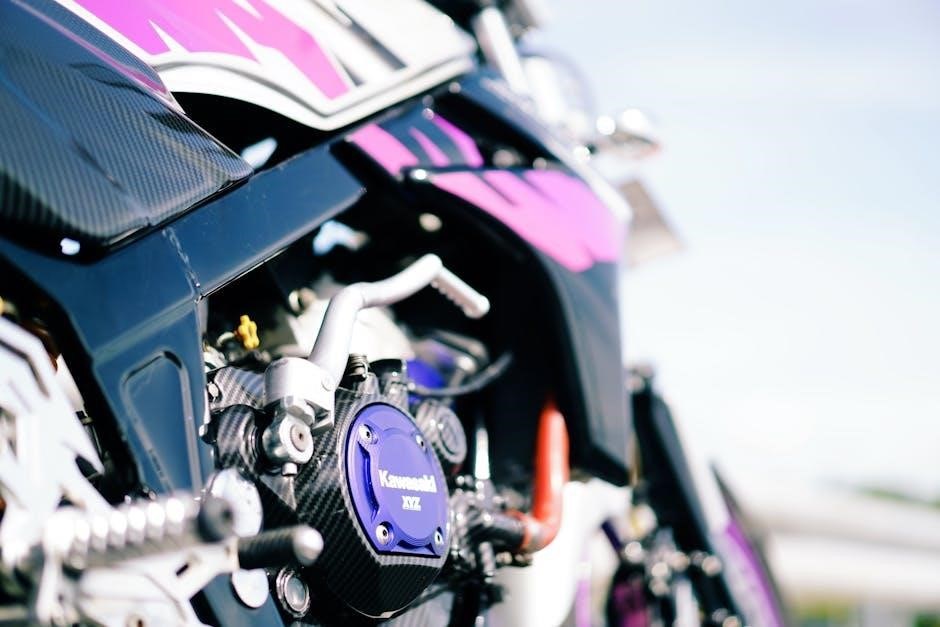
Cooling System Explained
The Kawasaki KAXS engine utilizes a liquid-cooled system to maintain optimal operating temperatures‚ preventing overheating and ensuring longevity. The manual provides a comprehensive overview of the system’s components: radiator‚ water pump‚ thermostat‚ and coolant hoses. Detailed diagrams illustrate coolant flow paths and component locations.
Service procedures outlined in the manual cover coolant flushing‚ thermostat replacement‚ and radiator inspection for leaks or damage. It stresses the importance of using the correct type of coolant‚ as specified by Kawasaki‚ to prevent corrosion. Troubleshooting guides address overheating issues‚ including potential causes like a faulty thermostat or a clogged radiator.

Regular inspection and maintenance‚ guided by the manual‚ are vital for preventing engine damage and ensuring reliable performance.
Lubrication System Breakdown
The Kawasaki KAXS engine’s lubrication system is crucial for minimizing friction and wear on internal components. The manual details the system’s architecture‚ including the oil pump‚ oil filter‚ and oil passages. It emphasizes the importance of maintaining proper oil levels and using the recommended oil viscosity‚ as specified in the service schedule.
Detailed illustrations within the manual showcase the oil flow path‚ ensuring technicians understand how each component receives lubrication. Procedures for oil changes‚ filter replacements‚ and oil pump inspections are thoroughly explained. Troubleshooting sections address low oil pressure issues‚ potential causes‚ and diagnostic steps.
Regular oil analysis‚ as suggested in the manual‚ can help identify potential engine problems before they escalate‚ ensuring long-term engine health.
Cylinder Head and Valve Train
The Kawasaki KAXS engine manual provides a comprehensive overview of the cylinder head and valve train assembly. Detailed exploded views illustrate each component‚ including valves‚ springs‚ retainers‚ and camshafts. Precise instructions guide technicians through valve clearance adjustments‚ a critical service procedure for optimal engine performance.
The manual emphasizes the importance of using the correct torque specifications when assembling the cylinder head‚ preventing leaks and ensuring proper sealing. Troubleshooting sections address common issues like valve noise‚ compression loss‚ and burnt valves‚ offering diagnostic steps and repair procedures.
Specific attention is given to camshaft timing and valve synchronization‚ crucial for maximizing engine efficiency. Regular inspections‚ as outlined in the manual‚ are vital for preventing catastrophic engine failure.

Repair and Overhaul
The manual details complete engine disassembly‚ inspection‚ and reassembly procedures. It covers piston‚ connecting rod‚ and crankshaft service‚ alongside essential torque specifications for reliable repairs.
Disassembly and Inspection
Before commencing any repair work‚ the Kawasaki KAXS engine manual emphasizes a thorough disassembly process. Begin by carefully removing external components‚ documenting each step with photographs for reassembly reference.
Inspect all parts meticulously for wear‚ damage‚ or corrosion. Pay close attention to cylinder walls‚ piston rings‚ and valve train components. Utilize precision measuring tools to verify dimensions against factory specifications.
The manual provides detailed guidance on identifying potential issues like scoring‚ cracking‚ or excessive clearances. Proper inspection is crucial for determining the extent of required service and preventing future failures. Document all findings before proceeding with further repairs or component replacement.
Piston and Connecting Rod Service
The Kawasaki KAXS engine manual details specific procedures for piston and connecting rod service. Begin by assessing piston condition for wear‚ scoring‚ or cracks. Measure piston diameter and compare to specifications; replace if outside tolerance.
Inspect connecting rod bearings for damage or excessive play. The manual outlines proper bearing clearance checks and replacement methods. Verify connecting rod straightness using a precision dial indicator.
Piston ring replacement is often necessary during overhaul. Ensure correct ring end gap and orientation during installation. Always lubricate piston rings before assembly. Torque connecting rod bolts to the manufacturer’s specified values‚ as detailed in the manual‚ to ensure proper clamping force.
Crankshaft and Bearing Inspection
The Kawasaki KAXS engine manual emphasizes thorough crankshaft and bearing inspection during overhaul. Begin by visually inspecting the crankshaft journals for scoring‚ pitting‚ or discoloration. Utilize a micrometer to measure journal diameters‚ comparing readings to factory specifications. Any deviation necessitates crankshaft grinding or replacement.
Bearing inspection involves checking for smooth rotation and any signs of damage. The manual details proper bearing clearance measurement techniques using plastic gauges. Replace main and connecting rod bearings if clearances exceed allowable limits.
Inspect crankshaft runout with a dial indicator to ensure straightness. Proper lubrication is crucial; verify oil passages are clear. Always refer to the manual for specific torque specifications when reassembling the crankshaft components.
Engine Reassembly Procedures
The Kawasaki KAXS engine manual outlines a precise reassembly sequence. Begin by carefully installing the crankshaft and bearings‚ ensuring proper lubrication. Next‚ attach the piston and connecting rod assemblies‚ verifying correct orientation and piston ring gaps. Torque all fasteners to the specifications detailed within the manual – critical for engine longevity.
Install the cylinder head‚ meticulously following valve timing instructions. Proper gasket sealing is paramount; use new gaskets as recommended. Reconnect the cooling and lubrication systems‚ double-checking all connections.
Finally‚ adjust valve clearances according to the manual’s guidelines. Confirm all components are securely fastened before initial startup. Referencing the manual throughout the process is essential for a successful rebuild.
Torque Specifications
The Kawasaki KAXS engine manual provides crucial torque specifications for every fastener. Adhering to these values is paramount to prevent damage and ensure reliable engine performance. Cylinder head bolts require precise tightening in a specific sequence‚ often utilizing a torque wrench and angle meter.
Connecting rod bolts‚ main bearing cap bolts‚ and piston pin nuts all have designated torque values. Ignoring these specifications can lead to component failure. The manual details separate torque settings for dry versus lubricated threads.
Always double-check each torque value before tightening. Using a calibrated torque wrench is essential. Refer to the manual’s charts for accurate specifications‚ as variations exist based on model year and engine configuration.

Additional Resources
Kawasaki dealers offer expert service and genuine parts. Online forums and communities provide valuable insights‚ while parts diagrams aid in identifying components for your KAXS engine.
Kawasaki Dealer Support
Your local Kawasaki dealer represents the most reliable source for comprehensive support regarding your KAXS engine and its associated manual. Dealers can directly supply official Kawasaki service manuals‚ often in both printed and convenient PDF formats‚ ensuring you have the most accurate and up-to-date information.
Beyond manual provision‚ dealership technicians possess specialized training and expertise in Kawasaki engines. They can offer professional diagnostics‚ perform complex repairs‚ and provide guidance on maintenance schedules tailored to your specific model. Don’t hesitate to contact your dealer for assistance with locating parts‚ interpreting technical diagrams‚ or addressing any challenging issues you encounter during maintenance or repair.
Remember‚ a knowledgeable dealer can significantly streamline your ownership experience and help maintain your KAXS engine in optimal condition. They are a crucial resource for all Kawasaki owners.
Online Forums and Communities
Numerous online forums and communities dedicated to Kawasaki motorcycles offer a valuable platform for KAXS engine owners seeking information and support. These digital spaces often host discussions about manuals‚ maintenance procedures‚ and troubleshooting common issues‚ providing a wealth of collective knowledge.
Members frequently share experiences‚ tips‚ and even scanned copies of service information. While not a substitute for official documentation‚ these forums can be incredibly helpful for clarifying specific points or gaining insights from fellow enthusiasts. Be mindful of verifying information obtained from online sources‚ cross-referencing with official Kawasaki resources whenever possible.
Active participation in these communities can foster a sense of camaraderie and provide access to a network of individuals passionate about Kawasaki motorcycles and their engines.
Parts Diagrams and Availability
Accessing detailed parts diagrams is crucial when working with the Kawasaki KAXS engine‚ especially during repair or overhaul procedures. These diagrams‚ often found within the official service manual or available through Kawasaki’s online parts catalogs‚ illustrate the precise arrangement of components and their corresponding part numbers.
Kawasaki dealers are the primary source for genuine KAXS engine parts‚ ensuring compatibility and quality. Online retailers specializing in motorcycle parts may also offer components‚ but verifying authenticity is essential. Availability can vary depending on the specific part and model year.
Utilizing part numbers from the diagrams streamlines the ordering process and minimizes the risk of receiving incorrect components. Always consult the manual for proper identification and torque specifications during reassembly.
Safety Precautions During Maintenance
Prioritizing safety is paramount when performing any maintenance on the Kawasaki KAXS engine. Always disconnect the battery’s negative terminal to prevent accidental electrical shock or short circuits. Wear appropriate personal protective equipment (PPE)‚ including safety glasses‚ gloves‚ and sturdy footwear.
Work in a well-ventilated area‚ especially when dealing with fuels‚ oils‚ or solvents. Properly dispose of used fluids according to local regulations. Avoid working on a hot engine to prevent burns. Ensure the motorcycle is securely supported on a stand or lift before undertaking any work.
Consult the manual for specific warnings and cautions related to each procedure. Never modify or bypass safety features. If unsure about any step‚ seek assistance from a qualified mechanic.